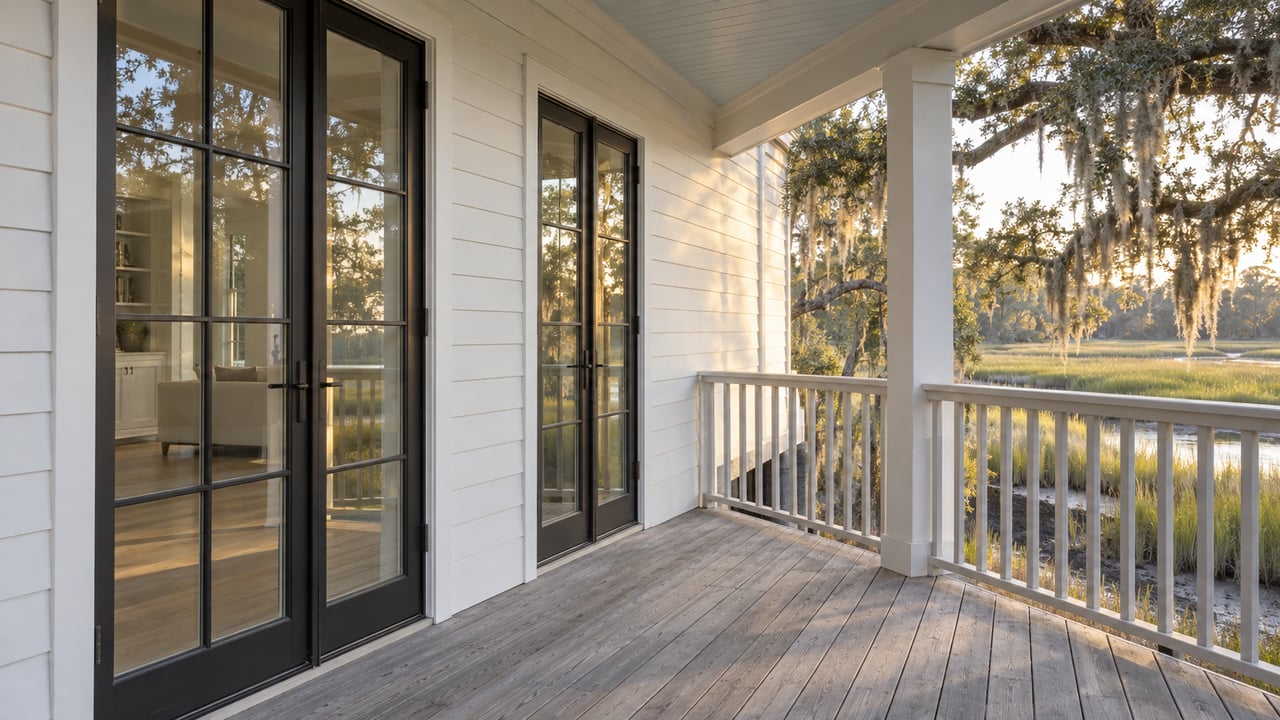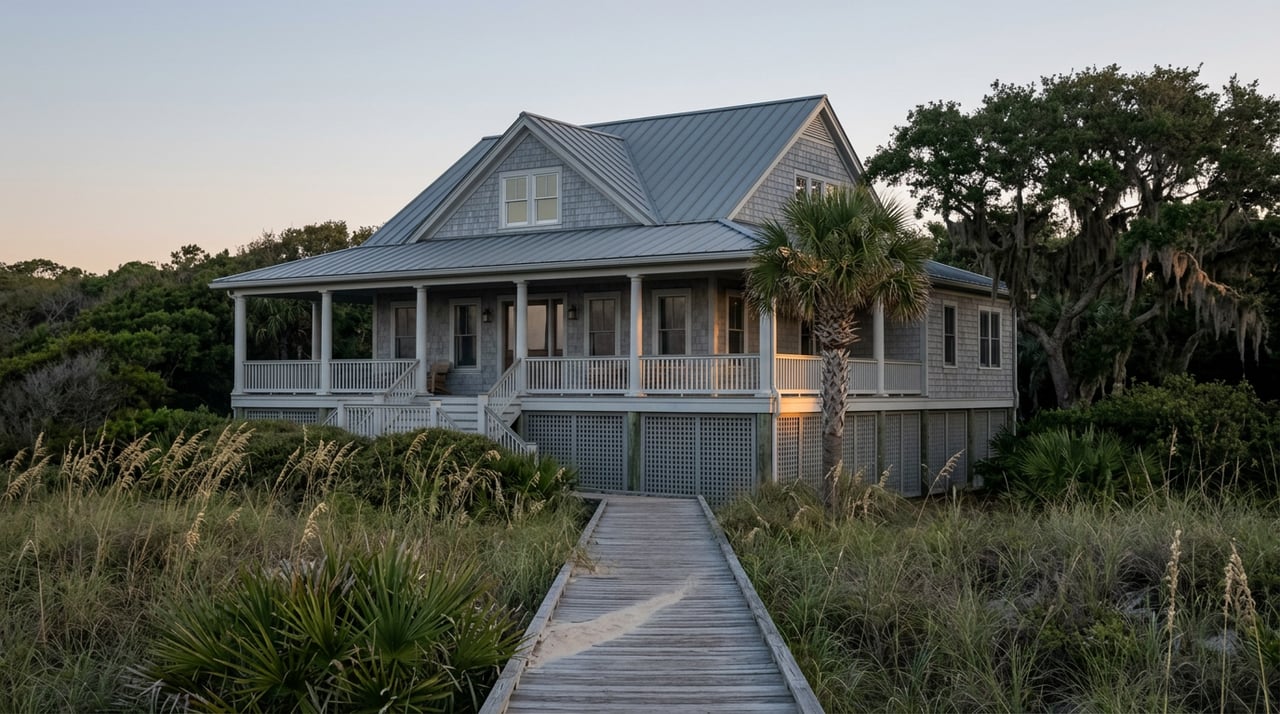
In a report earlier this month, WSAV quoted Amber Kuehn, the state permit holder for sea turtle monitoring on Hilton Head Island: "We've had a lot of rain lately and that does affect our emergence success." She was talking about hatchlings, about eggshells, about a nest inventory that had just come up short of perfect. She was also, without quite saying it, describing the tail end of one of the biggest nesting seasons this island has recorded in years, one that happens to be unfolding on the same stretch of Atlantic beach that Port Royal Plantation residents have walked all summer.
If you live inside the gates at Port Royal, you have probably noticed more marked poles on the sand this year than usual. You are not imagining it.
A Season That Nearly Doubled
Hilton Head's beaches average around 250 nests a season, based on the long-term tracking kept by the Seaturtle.org monitoring network. Last year came in well under that number. Sea Turtle Patrol Hilton Head Island reported 237 total nests for the 2025 season, a quiet year by recent standards.
This year is a different story. As of early September, Kuehn's count stood at 414 nests on the island's main ocean beach, with another 13 laid on the smaller sound-side beaches. That is not a modest uptick. It is close to double the 2025 total, and it lands as the second-largest season on record, trailing only the 463 nests laid in 2019. Whether 2026 catches that record depends on a handful of late nests still incubating, but the season has already made its point: this was not a typical year on the sand.
Why This Particular Beach Counts
Most of Hilton Head's nesting happens on the ocean-facing shore, roughly 23.8 kilometers of it, rather than on the smaller pocket beaches that face Port Royal Sound near Pine Island and Mitchelville. That distinction matters here, because Port Royal Plantation's private shoreline sits directly on that primary ocean beach, not on the sound side. The Westin Hilton Head Island Resort, which occupies land within Port Royal Plantation, fronts the same stretch of Atlantic sand where the bulk of this year's 414 nests were laid.
In practical terms, if you have three miles of private beachfront and access through the Port Royal Beach House boardwalk, you are not adjacent to this season's story. You are standing in the middle of it.
Two Different Groups, One Beach
Ask most residents who is "watching the turtles" and you will get one answer: Sea Turtle Patrol. That is only half correct.
Sea Turtle Patrol Hilton Head Island holds the actual state permit, issued by the South Carolina Department of Natural Resources under Kuehn's name. Their volunteers walk the beach every morning starting May 1, looking for the telltale tractor-tread crawl marks that mean a female came ashore overnight. When they find a nest, they mark it with stakes and flagging tape, then wait. After a nest emerges, patrol members hold off three days before digging in to conduct an inventory, counting hatched shells, unhatched eggs, and any hatchlings that never made it out on their own.
A separate nonprofit, Turtle Trackers, works the same beaches on the opposite schedule. Founded in 2016 by a small group in Sea Pines, the organization has grown to six chapters and more than 350 volunteers across the island. Their job happens in the evening: flattening sandcastles, filling in holes left by beach chairs and umbrellas, and clearing obstacles that could trap a hatchling trying to cross open sand in the dark. Sea Turtle Patrol holds the permit and does the official science. Turtle Trackers does the unglamorous groundwork that keeps the beach passable for hatchlings after the sun goes down.
Both groups are still active on Port Royal's stretch of beach right now. Hatching season runs through the end of October, which means the work is not finished just because Labor Day has come and gone.
What You Will Actually See Between Now and October
If you walk the beach at Port Royal this month, here is what you are looking at. Marked nests still standing, some with visible depressions where hatchlings have already emerged, others still waiting out the final stretch of a 45 to 60 day incubation period. A single nest can hold around 120 eggs, so an emergence is rarely a quiet event when it happens, though most of it takes place overnight and is gone by the time residents are out for a morning walk.
The 74 percent hatch success rate Kuehn cited earlier this month is a strong number, only a couple of points off the best seasons on record, but it is also a reminder that not every nest ends well. Heavy rain can flood an egg chamber. Predators can find a nest before it is marked. Some inventories turn up hatchlings that made it partway out but got stuck, and patrol volunteers will carry those down to the waterline themselves and give them a chance to reach the surf.
There is also a rule that applies specifically to beachfront homes like the ones along Port Royal's shoreline: according to a Palmetto Dunes blog, oceanfront properties are required to keep outside lights off between 10 p.m. and 6 a.m. through the end of October. Hatchlings navigate to the water by following the brightest light on the horizon, which is supposed to be the moon reflecting off the ocean. A porch light or an unshielded pool light can pull them the wrong direction entirely. In a community where beach access is private and limited to residents and their guests, this is one of the few beach rules that residents themselves are responsible for enforcing on their own property, not something a patrol volunteer can fix after the fact.
A few practical notes for anyone walking the beach through the rest of hatching season:
- Give any marked nest a wide berth, and never move the stakes or tape.
- Fill in holes and flatten sandcastles before you leave the beach for the day.
- Be mindful of exterior and pool lighting if your property faces the water.
- If you spot a sick, injured, or stranded turtle, the state hotline is 1-800-922-5431.
The Quiet Advantage of a Private Beach
Port Royal Plantation's beach rules exist for reasons that have nothing to do with turtles: privacy, low density, and, according to the Port Royal Plantation website, no short-term rentals inside the gates. But those same rules happen to line up neatly with what a nesting beach needs most, which is less nighttime foot traffic. It is not something the community set out to do for conservation's sake. It is simply what happens when a beach stays limited to residents and their guests.
That is not a reason to buy or sell anything. It is just one more detail that separates living on this particular stretch of the island from reading about it. The nests are still out there. The volunteers are still walking the sand every morning and evening. And for the next several weeks, anyone who lives inside Port Royal's gates has a better view of one of the busiest turtle seasons in years than almost anyone else on Hilton Head.
If you are already living that view and have questions about your property, your beach access rights, or anything else tied to owning inside Port Royal Plantation, Debra Reece has spent years working this exact stretch of the island and is always glad to talk it through. You can also browse more on the Port Royal Plantation neighborhood page or read about how the recently renourished beach has held up this year. Let's Connect whenever you're ready.
This article is general information, not legal, tax or financial advice. Consult a qualified professional about your situation.