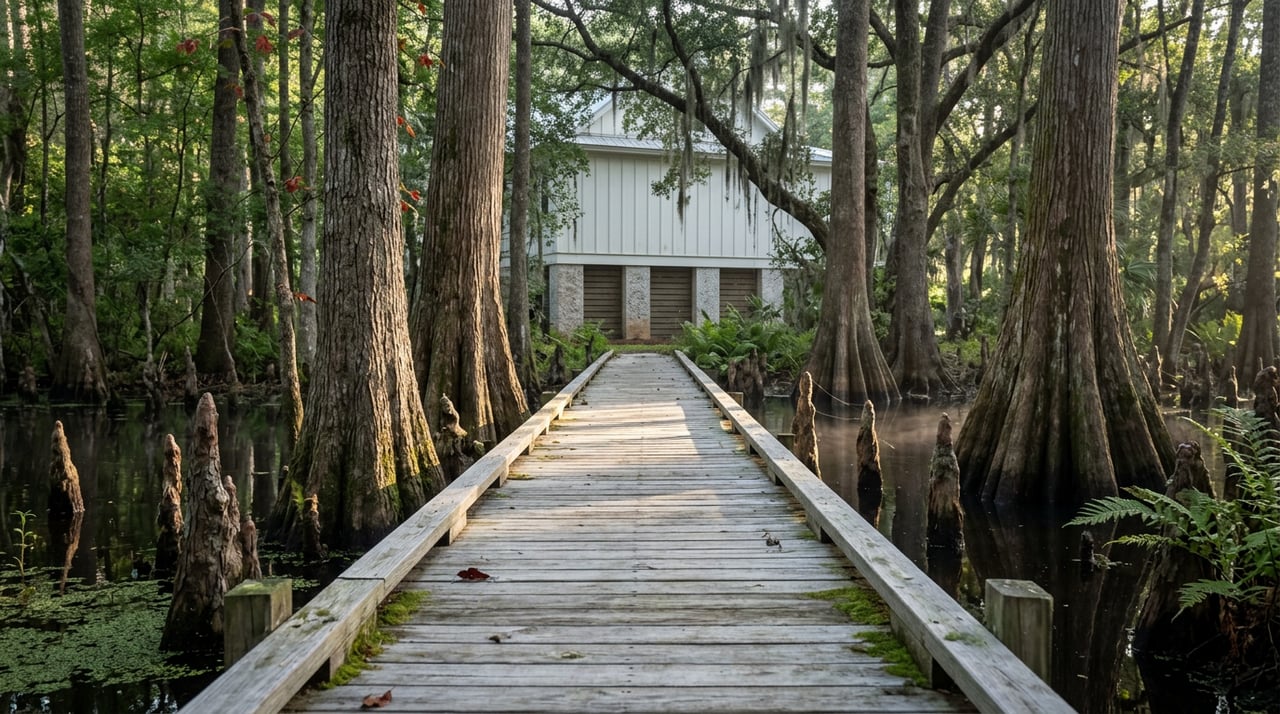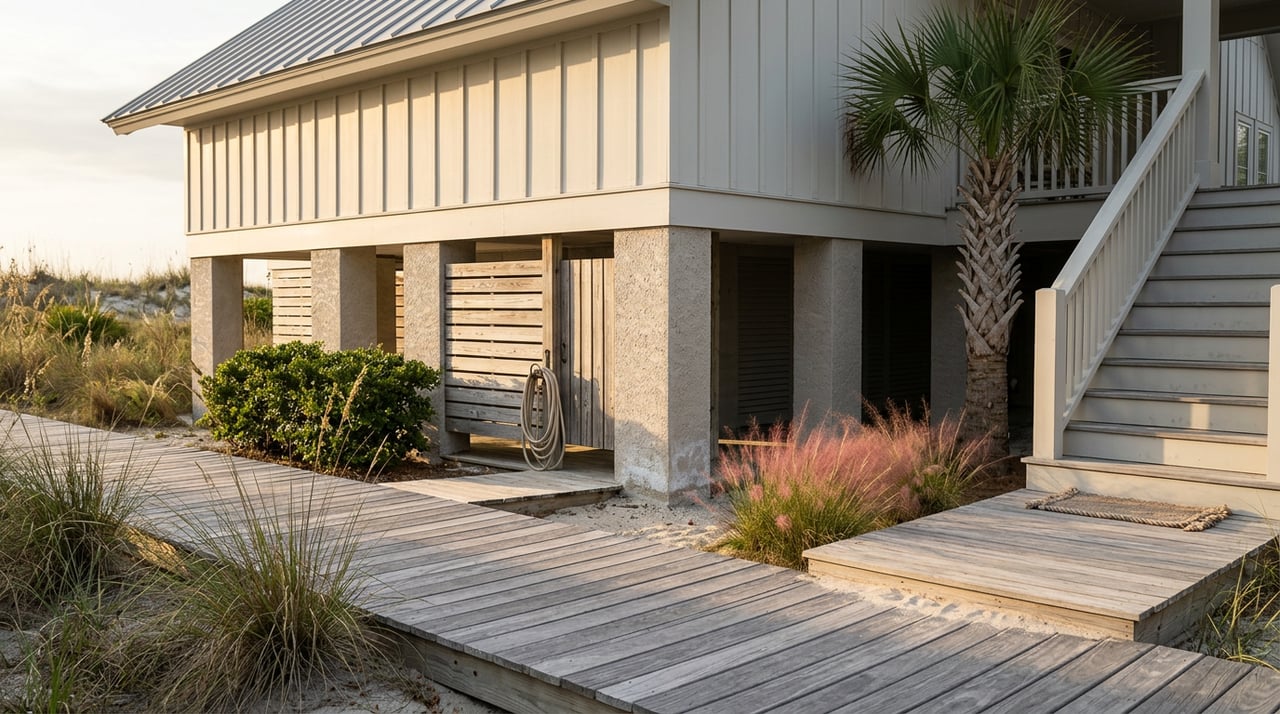
Walk the boardwalk from the Beach House this month and the sand underfoot behaves differently than it did last summer. It holds a footprint instead of shifting away from one. The wrack line sits higher and drier. If you have walked this stretch daily for years, as many Port Royal residents have, you already noticed the change months ago. What you may not have clocked is why your beach settled into its new shape well before anyone else's did.
The answer is a matter of scheduling, not luck. When the Town of Hilton Head Island sequenced its 2025-2026 beach renourishment project, Port Royal's own frontage, the section engineers call the Heel, went first.
The Heel Went First
The Town's $47.5 million renourishment effort, its fifth large-scale project since 1990 and its first in a decade, broke ground with a contractor mobilization in July 2025. Work at Pine Island began that August, and by November 2025 the Town had completed sand placement at the Heel, the northeast point where the Atlantic meets Port Royal Sound and where Port Royal Plantation's own shoreline sits. That single phase moved roughly 500,000 cubic yards of sand along 5,280 feet of coastline, according to the Town's own project documentation.
By the time most of the island's beaches were still waiting their turn, Port Royal's had already finished settling into its new width. Hilton Head's Communications and Marketing Director, Heather Woolwine, described the visible result in an April 2026 broadcast interview: "We've had some results at this point, where we've got more than 100 feet of beach that has been added." That comment covered island-wide progress, but it applies with particular force to the Heel, which had a five-month head start on everything south of it.
What Nine Months of Settling Looks Like Underfoot
Freshly placed renourishment sand looks and behaves differently from sand that has weathered a winter of tides. When the dredge first deposits it, the mixture carries small amounts of shell and mud, giving it a darker cast that only fades once the sun and surf work it over for a few days. Loose, uncompacted grains shift more underfoot in that early period, which is why newly renourished stretches can feel softer or looser to walk on than the beach residents remember from years past.
Port Royal's stretch has had far longer than a few days. Nine months of tidal cycles, sun exposure, and ordinary foot and paw traffic have compacted and color-corrected the sand at the Heel, while the island's more southern beaches, including Forest Beach and Sea Pines, were only wrapping up their own placement as late as May 2026. A Port Royal resident walking the beach today is walking on sand that has had roughly three-quarters of a year to become part of the landscape again. A friend a few miles south may still be walking on sand that finished settling in only this summer.
While the Rest of the Island Waited Its Turn
The Town's phased schedule makes the contrast concrete:
- Phase I – Port Royal (the Heel), Fish Haul, and Pine Island. Mobilized July 2025, completed at the Heel in November 2025.
- Phase II – Central Island beginning November 2025, then Palmetto Dunes and North Forest Beach through mid-March 2026, then Forest Beach and Sea Pines through late May 2026.
- Phase III – Pine Island's rock breakwater structures, scheduled separately and completed in April 2026.
As of March 2026, industry trade coverage reported the project more than two-thirds finished, with the Town's own schedule pointing to completion by May. What it means for Port Royal is straightforward: the community's own renourishment was never the story that made the news this spring. By the time reporters were covering the island's final phase wrapping up in Sea Pines, Port Royal's beach had already been back to normal for months.
The Walk Itself
None of this would matter much if Port Royal's beach access were limited or hard to reach. It is not. According to the Port Royal Plantation Community Association, the community maintains 21 beach access points, seven of which include boardwalks, so residents can reach the sand from nearly anywhere inside the gates without driving to a single central lot.
The Beach House sits at the heart of that network. It is the Landowners' own gathering place on the Sound, with a community room, screened porch, oceanfront deck, and beach lockers, plus a boardwalk that puts you on the newly settled sand within a couple of minutes of leaving your towel on a chair. For those who want to extend the walk rather than turn around at the water, the community's arboretum and its miles of leisure paths wind past freshwater lagoons and saltwater estuaries, terrain the Landowners' Association credits with keeping wildlife sightings a routine part of an early loop.
Longtime residents have built genuine rhythms around this stretch of coast. The community's Wine and Dine Club has met for more than two decades, typically on the third Saturday of October, November, January, and March, rotating hosting duties among member couples. Afternoon Duplicate Bridge convenes on the fourth Wednesday of each month at the Beach House. None of that changed because of a dredge and a pipeline. If anything, a beach that finished its comeback nine months ago just gives those routines a wider, firmer place to happen.
One Neighbor Still Finishing Up
If you extend a walk or a bike ride north toward Dolphin Head, you will cross into Hilton Head Plantation, where Pine Island Beach only reopened to the public on April 11, 2026, after Cape Romain Contractors finished installing six rock breakwater structures along that shoreline. Pine Island's renourishment sand had gone down back in the same Phase I window as Port Royal's, but the breakwater construction that followed kept that particular beach closed for months afterward.
It is a useful point of comparison. Two adjacent shorelines started their renourishment work in the same summer, and one has spent nearly a year settling into its new profile while the other only recently reopened. Port Royal's timing, arguably, worked out well.
A Quiet Beach, Wider Than It Was
Port Royal's no-rental policy means this newly widened beach never sees the seasonal surge that hits other stretches of the island each summer. The sand got wider. The crowd did not. For residents who already treat this coastline as an extension of their own backyard, that combination, a settled beach with the same unhurried character it has always had, may be the most useful update all year.
If you are a Port Royal homeowner curious about how this season's coastal work might affect your property's value or timing on a future sale, or if you know someone weighing a move into the community and want a candid, locally grounded read on what ownership here actually involves, Debra Reece is glad to talk it through. Let's Connect.