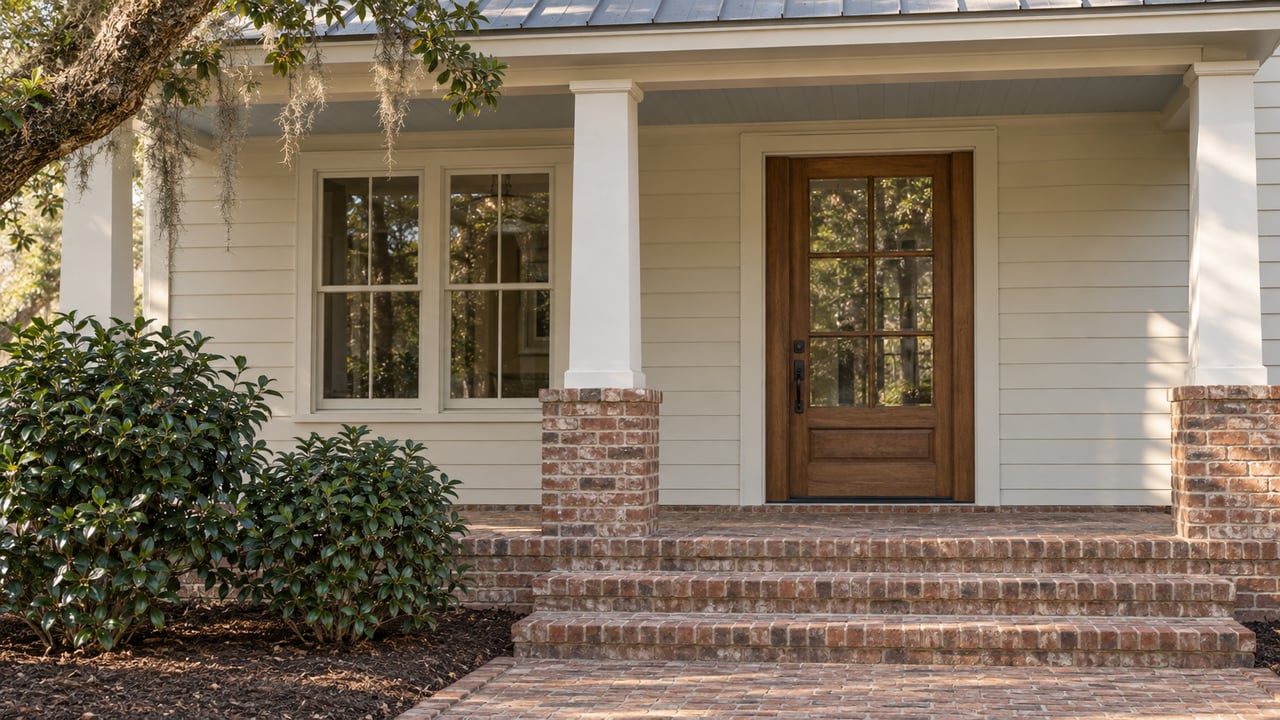
When you close on a home in Hilton Head Plantation, one line on the settlement statement goes to a fund that pays for things the community hasn't built yet. The Capital Transfer Fee is set at one quarter of one percent of the sale price, according to The Island Packet. On a $1 million purchase that comes to $2,500, paid once by the buyer. The POA's 2025 audited financial statements describe the fund as money "charged to purchasers" and set aside for future capital projects and major improvements.
That fee helps explain why Hilton Head Plantation's annual assessment is one of the lowest among the island's gated communities. It also explains this fall's debate. The Hilton Head Plantation POA board has scheduled its review of consultant HALFF's capital assessment report for Thursday, October 22. The projects in that report include a possible rebuild of the Plantation House, and they add up to more than the transfer fund can pay for. Anyone buying this fall pays into that fund at closing, and the decisions about what it will cover are still open.
How a Low Assessment Pays for New Things
For 2026, the HHP assessment sheet lists $1,404 for an improved lot paid by cash or check, or $1,432 by credit card or through Engage. Unimproved lots are $842 or $859. The 2025 rate for a home was $1,328, so the 2026 increase was $76.
Those dues pay for operations and upkeep. Up to 15% of each year's assessment, not counting the weather casualty portion, can go to a major repair and replacement fund, and the board used that option for 2025. The dues are not designed to pay for new buildings. The POA's 2026–2030 Strategic Plan says so directly: "The current level of HHP property owners' assessments does not include funding for major new capital investments."
According to the plan, large projects may be paid for through three sources:
- Sustained user fees
- Capital Transfer Fees
- Special POA assessments, "if necessary"
Of the three, the transfer fee has done most of the work. At the September 24 Coffee with the Board, the POA treasurer said transfer fees paid for the pool and for Dolphin Head. In 2025, the association received $690,800 in capital transfer fees. The strategic plan's financial assumptions count on at least $500,000 a year from the fee through 2030.
In practice, home sales pay for most of the community's new amenities, and the annual assessment covers keeping existing ones running. That works well when projects are modest, and the list now under study is far larger.
What HALFF Was Asked to Study
The POA hired HALFF, a national planning and engineering firm, to study five areas. The board said it looked at close to 40 firms across the Southeast before narrowing the list to five. It also said early bids for a full community master plan would have run about $250,000, while the current engagement costs less than $80,000. The first resident survey went out to more than 5,600 Engage email addresses. The POA published all 4,988 written comments, with a handful of words redacted.
On a one-to-five scale, owners rated the five areas this way:
| Focus area | Survey priority score | What's under discussion |
|---|---|---|
| Security, gate access and technology | 4.76 | Main and Cypress gate upgrades; license plate reading to automate guest and vendor entry |
| Leisure paths | 4.26 | Repairs to the most-used amenity, which 85% of respondents say they use daily or weekly |
| Plantation House | 4.02 | Renovate, or tear down and rebuild |
| Spring Lake recreation | 3.66 | Possible dedicated pickleball courts |
| Dog park | 2.22 | Proposed new amenity |
The Plantation House carries the biggest price tag. The Island Packet reported that the previous developer donated the building to the community in the 1980s, and General Manager Peter Kristian described it as old and in need of constant maintenance, with an inefficient HVAC system and insulation below modern standards. Kristian told the paper he favors replacing it, and that one option is to keep it open while a new building goes up next door, since a number of clubs meet there. At the September 24 Coffee with the Board, a board member put the cost of redoing or rebuilding it somewhere between $7 million and $12 million, depending on size, scope and design work that has not started.
"A lot of it is going to be based on their tolerance for pain. Everybody wants a shiny new thing. But when they find out how much the shiny new thing costs, sometimes they shy away from that." Peter Kristian, HHP General Manager, speaking to The Island Packet
Why the Transfer Fund Can't Cover It Alone
The Capital Transfer Fund held $1,303,412 at the end of 2025. At 2025's pace of $690,800 a year, the low $7 million estimate for the Plantation House would take about a decade of transfer fees. At the strategic plan's $500,000-a-year floor, the high $12 million estimate would take more than 20 years. Neither figure includes gates, paths, courts or a dog park.
The board has said as much. In the September 24 Coffee with the Board recording, the treasurer said the transfer fund is "not going to pay for this." He also said the finance committee is "comfortable with borrowing but reluctant," because borrowing would leave the cost to future owners. He gave a second constraint too. Paying for new buildings out of savings would leave too little in the weather casualty fund for a hurricane. After the cleanup that followed the last major storm, the community rebuilt that reserve with a three-year special assessment.
The comparison with other communities makes the trade-off concrete. For 2026, Sea Pines lists $2,065 for an improved lot, and the Palmetto Dunes POA set its residential assessment at $2,000. The Island Packet reports Port Royal Plantation dues of $2,282 for 2026. Hilton Head Plantation's $1,404 is $600 to nearly $900 a year less than those three. That gap is real savings. It also means there is less room in the regular budget for large new projects, and the board is now asking owners how much more they would be willing to pay.
The Calendar a Fall Buyer Is Closing Into
None of these projects has been approved. At the September meeting, the board said its nine members had not voted on or discussed the projects, and that detailed design would not start until priorities were set. As presented on September 24, the schedule looked like this:
- September 30: target date for HALFF to deliver its assessment report
- October 22: board meeting with HALFF to review the full report
- November: work begins on a second resident survey showing each project's scale, timeline and cost range, and asking owners how large an assessment they would support
- After the survey: the board sets capital plan priorities and reports back to owners
Kristian told The Island Packet the plan is "very fluid." He also said another community meeting would follow once HALFF produces clearer renderings and cost estimates.
Routine infrastructure work continues alongside the planning. HHP's July 30 Coffee with Peter presentation reported that Spring Lake Village paving was nearly complete. The final overlay was waiting on repair of a failed stormwater pipe, and new leisure-path construction had most recently reached Skull Creek Drive. At a May 28 session, Kristian also floated repaving Whooping Crane Way the following year. He cited one quote of about $1.4 million and said it "is not going to be an inexpensive operation." That remains a proposal, not a scheduled project.
Questions to Raise Before You Write an Offer
If you're comparing Hilton Head Plantation with other gated communities this fall, the capital plan affects your cost of ownership, not just the community's to-do list. A few documents and questions help:
- Ask for the current assessment sheet and confirm the improved-lot rate and payment options for the year you'll own.
- Ask the POA, through your closing team, whether any special assessment has been adopted or scheduled by the time you go under contract, and how it would apply to a new owner.
- Confirm the Capital Transfer Fee amount on your settlement statement, calculated from your contract price.
- Read the most recent audit and the 2026–2030 Strategic Plan, both posted on the POA's public site, to see the fund balances and stated funding approach for yourself.
- Follow the second survey. New owners will be voting on the cost ranges it presents.
For a fuller picture of ownership costs inside the gates, see our breakdown of what your budget buys inside Hilton Head Plantation and our look at the community's rental covenant. This post is general information, not legal, tax or financial advice, so please confirm fees and obligations for your own purchase with the POA, your closing attorney and your financial advisor.
FAQ
Who pays Hilton Head Plantation's Capital Transfer Fee? The POA's 2025 audit describes it as charged to purchasers, and The Island Packet reports it as one quarter of one percent of the sale price.
Has HHP approved a special assessment for the Plantation House or the gates? As of the September 24 Coffee with the Board, no. The board said no projects had been selected, and the second survey is meant to gather owners' views on cost ranges and assessment size before priorities are set.
What has the transfer fund paid for before? According to the POA treasurer at the September meeting, the community pool and Dolphin Head. Our post on Dolphin Head's rebuilt pavilion covers what that project changed.
If you're weighing a home in Hilton Head Plantation while the capital plan is still being decided, I'm glad to go through the assessment sheet, the transfer fee and the survey timeline with you so you know what you're paying for at closing. Debra Reece can help you get the POA documents for your purchase in hand early. Let's connect.