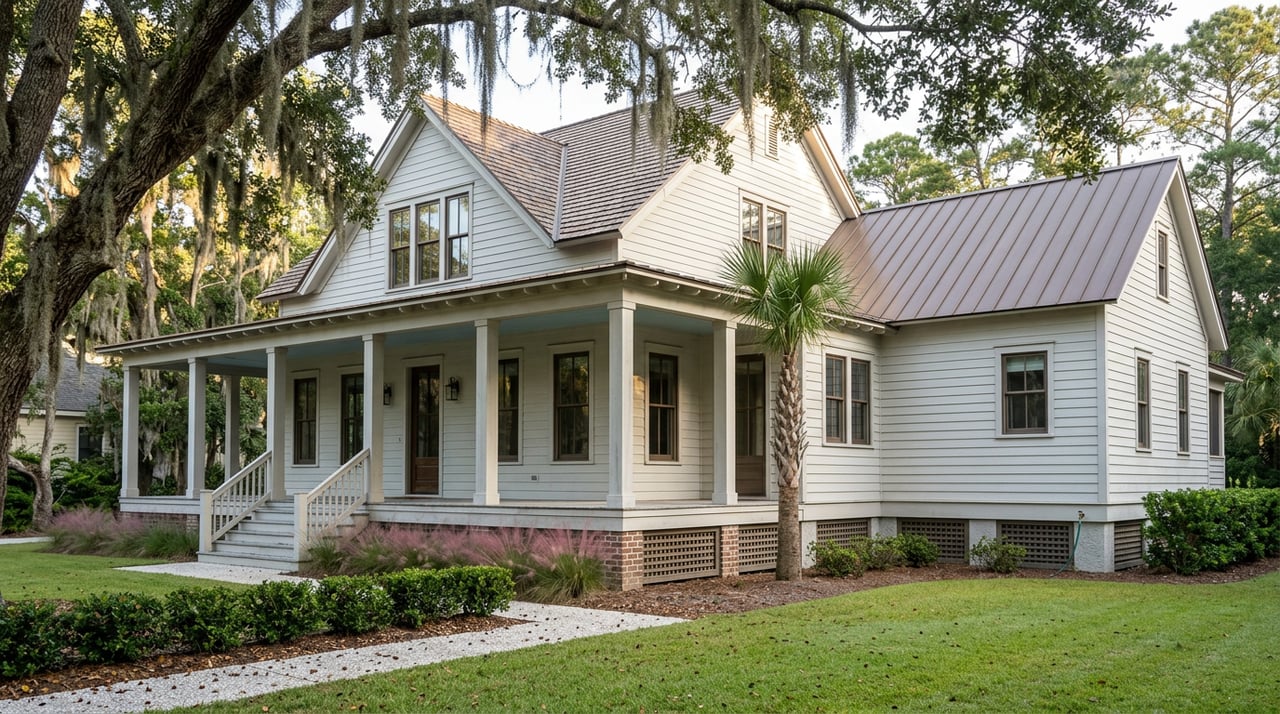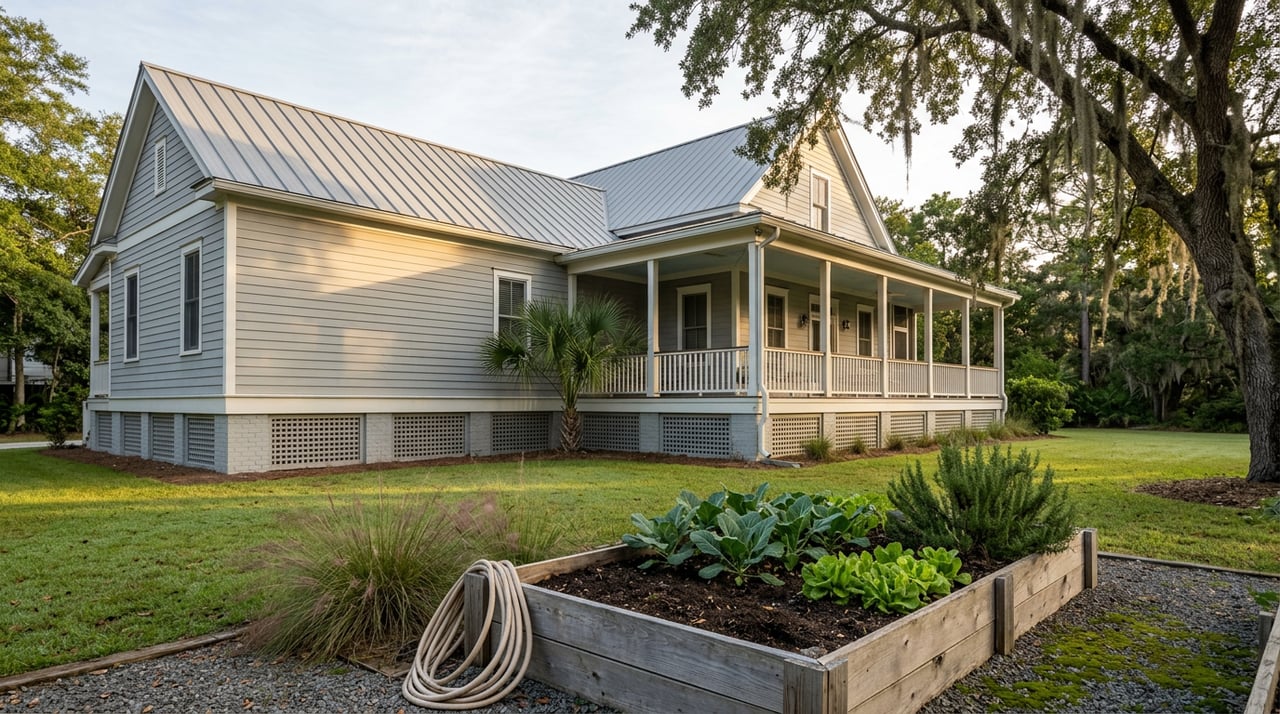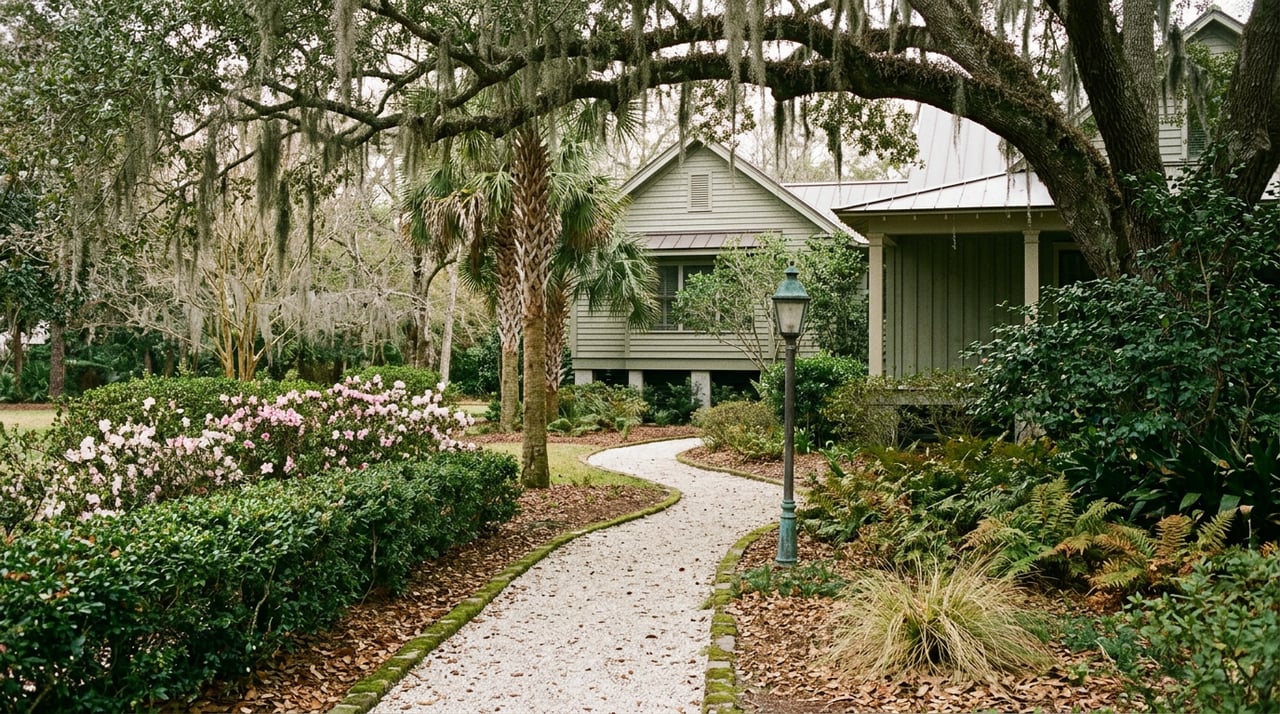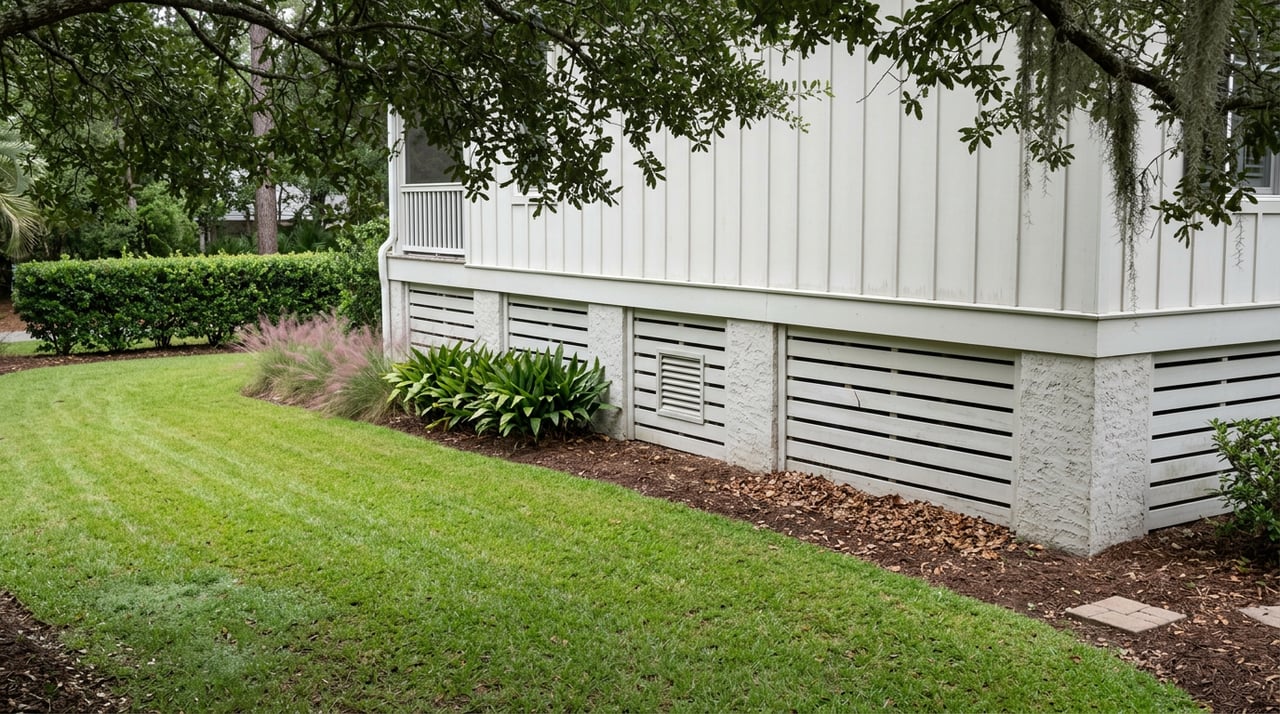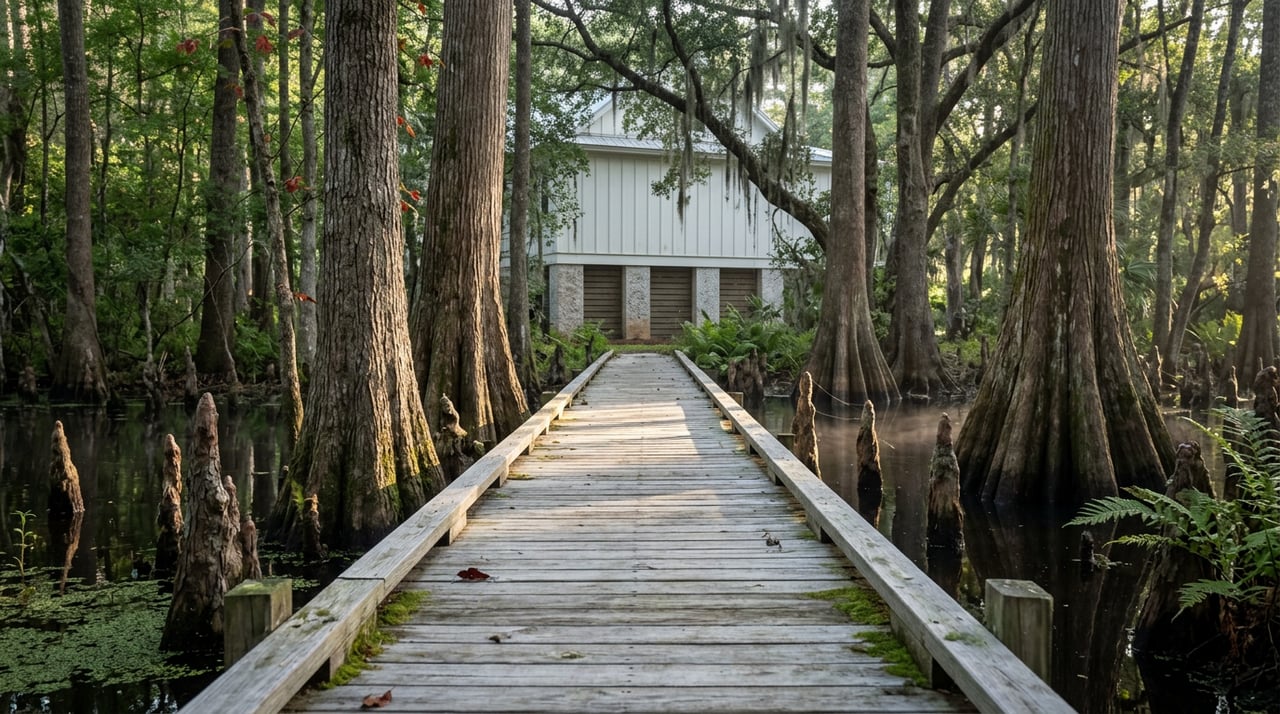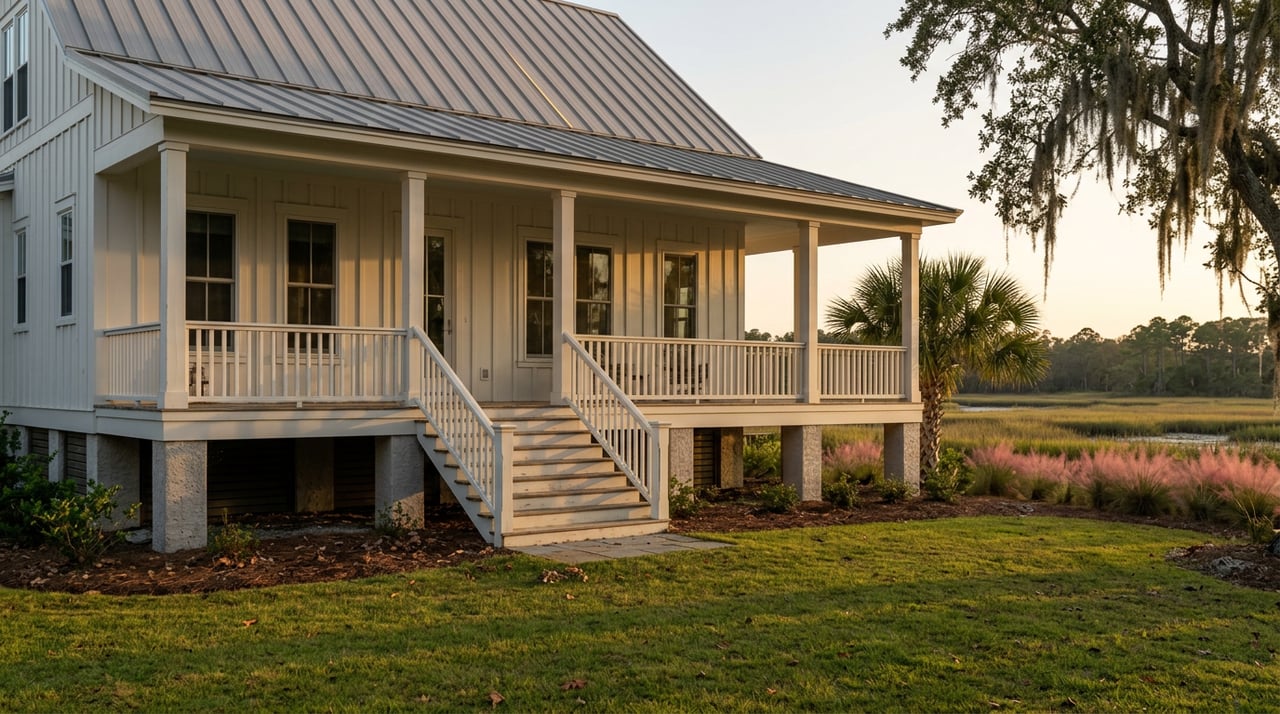
Picture two homes under contract in Hilton Head Plantation the same week, both marketed as waterfront, both priced within $50,000 of each other. One buyer's homeowners insurance quote comes back near the low end of what an interior home pays, a couple thousand dollars a year. The other's comes back north of $7,000. Same gate, same POA, same word on the listing sheet. Almost nothing else in common.
The gap had nothing to do with square footage or roof age. It came down to which of three very different products the word "waterfront" was actually describing, and whether either buyer had thought to ask before writing an offer. That's the part most buyers learn during due diligence instead of during the showing, and it's worth understanding before you're the one signing at closing.
Three Products Wearing One Label
Hilton Head Plantation spans close to 4,000 acres on the island's north end and holds roughly 4,200 homes, which means "waterfront" inside its gates covers a lot of ground, literally. But the label collapses at least three distinct categories into one word, and each carries its own price band, dock rights, and insurance profile.
| Waterfront type | Typical neighborhoods | Price range | Dock access | Insurance range |
|---|---|---|---|---|
| Deepwater (Skull Creek / Port Royal Sound) | Skull Creek frontage lots | $1.2M–$3M+ | Existing docks common; new permits take 12–18 months | Often $4,000–$8,000+ per year |
| Lagoon-front | Bear Lake, Spring Lake, Crooked Pond | $500K–$1.5M, typically $400K–$700K below comparable Skull Creek homes | Kayak and paddleboard launch, not deepwater dockage | Moderate, but varies by elevation |
| Marsh-front (tidal creek view) | Dolphin Head, Oyster Reef, Headlands, Ribaut Island | $600K–$2M | Usually none; shallow tidal creeks don't support boat dockage | Driven by elevation and flood zone, not proximity to water |
That last column is where most buyers get surprised. Because premiums follow the elevation certificate and the flood zone line rather than the listing description, a marsh-front home with sweeping tidal views and no dock can, depending on where its foundation sits relative to base flood elevation, land in a lower-risk zone than a lagoon-front home priced well below it. The reason has nothing to do with how close either house sits to water. It has to do with a line on a federal map that runs straight through the neighborhood rather than around it.
The Flood Line Runs Through the Neighborhood, Not Around It
Beaufort County's current effective Flood Insurance Rate Maps, the FIRMs that determine which properties sit in FEMA's Special Flood Hazard Area, were published in 2021 and remain the operative maps today. That means two homes a few hundred feet apart, one in Zone AE and one in Zone X, can carry dramatically different premiums even if both technically qualify as waterfront on a listing sheet.
The elevation certificate, not the view, is what an underwriter actually prices. A home whose lowest floor sits well above the base flood elevation can land in a lower-risk zone even with a lagoon in the backyard. A home with a wide marsh vista but a lower foundation can land in a stricter zone despite having no dock, no bulkhead, and no boat.
The county-wide numbers back this up. As of March 2026, Beaufort County carried more than 53,000 active NFIP policies with an average annual premium near $692, a figure that only makes sense once you realize it's blending waterfront estates and interior homes several miles from tidal water into one average. The real spread for buyers looking at HHP water-facing homes runs closer to the $2,000 to $8,000 range cited above. Beaufort County's own claims record adds another wrinkle: from 2014 to 2024, nearly a third of the county's NFIP claims came from properties outside the high-risk flood zone entirely. Being labeled low-risk on a map doesn't mean being risk-free.
If you're serious about a specific address, the smart move is pulling the parcel's designation directly from FEMA's Flood Map Service Center before you request an insurance quote, not after.
The Permit You Can't Buy on a Deadline
Money solves most real estate problems on a reasonable timeline. Dock permits don't work that way. Adding a new dock in Hilton Head Plantation requires approval from both the South Carolina Department of Health and Environmental Control and the U.S. Army Corps of Engineers, and that process typically takes 12 to 18 months from application to permit in hand, with environmental review built into every step.
That timeline is why an existing, permitted dock functions as real value rather than a cosmetic bonus. A Skull Creek home with a documented dock permit lets a buyer start boating the week they close. A lagoon or marsh lot without one means over a year of waiting, with no guarantee of approval at the end, since shallow tidal creeks in several HHP neighborhoods don't support boat dockage regardless of paperwork.
Bulkhead condition matters just as much. Replacement can exceed $30,000, and it's the kind of cost that shows up in a marine contractor's report rather than a standard home inspection. If you're evaluating a deepwater property, that inspection belongs on your checklist as its own line item, not folded into the general walkthrough.
For anyone on the selling side of this equation, a permitted dock and a recent bulkhead survey are documentation worth having ready before you ever list. If you're weighing what a water-facing HHP property might bring in today's market, a home valuation that accounts for dock status, not just square footage, gives a more honest starting number.
What a Skull Creek Address Actually Buys
Skull Creek Marina sits inside Hilton Head Plantation with concrete floating docks that accommodate vessels up to 200 feet and offers 24-hour security, which is part of why deepwater addresses near it carry the premium they do. But a slip at the marina isn't the same kind of asset as the house next to it. Marina slips there convey through a long-term lease rather than outright ownership of the underlying property, a structural difference worth understanding before you count a slip as equivalent equity to the home itself, especially when financing or eventually reselling.
Golf works on a similarly easy-to-miss distinction. Four courses run through Hilton Head Plantation: Oyster Reef, Dolphin Head, the ClubCorp-managed Country Club of Hilton Head, and the strictly private Bear Creek, which caps membership at 250 golfers. Unlike some gated communities on the island where club dues are bundled into ownership, membership at all four HHP courses is optional. That means two neighbors on the same street can pay entirely different annual totals for the same address, depending on what they choose to join rather than what the deed requires.
Before writing an offer on any water-facing lot in Hilton Head Plantation, a short list is worth working through:
- Ask for the dock's actual permit documentation and issue date, not just a photo of the structure
- Request the elevation certificate before you request an insurance quote, since the certificate is what the quote will be built on
- Confirm whether a marina slip, if included, is a lease and how many years remain on it
- Check which golf course, if any, comes with mandatory dues versus optional membership
FAQ
Do I need flood insurance if my Hilton Head Plantation home isn't in a high-risk zone? Standard homeowners policies don't cover flood damage regardless of zone, and Beaufort County's own claims history shows nearly a third of NFIP payouts from 2014 to 2024 went to properties outside the designated high-risk area. A low-risk designation lowers the premium; it doesn't eliminate the exposure on a barrier island.
Can a lagoon-front lot get a boat dock added later? Lagoon and most marsh-front waterways in HHP are too shallow to support the kind of dockage deepwater buyers picture, which is why those areas are built around kayak and paddleboard access instead. Deepwater dock additions are only realistic on Skull Creek or Port Royal Sound frontage, and even there, DHEC and Army Corps approval runs 12 to 18 months with no guarantee.
Is golf membership required to live in Hilton Head Plantation? No. Membership across all four courses, including the ClubCorp-run Country Club of Hilton Head and the member-capped Bear Creek, is optional rather than bundled into HOA dues, which sit around $1,200 to $2,400 a year depending on the neighborhood and whether the home is part of a villa regime.
If you're comparing a Skull Creek listing against a lagoon lot two streets over, or trying to figure out what a dock permit is actually worth on a home you're preparing to sell, that's the exact kind of due diligence I walk clients through before an offer goes in, not after. Debra Reece has spent years reading the fine print behind Hilton Head Plantation's water-facing listings so her clients don't have to learn it at closing. Let's Connect.